
Outdoor Adventure in the Early 20th Century
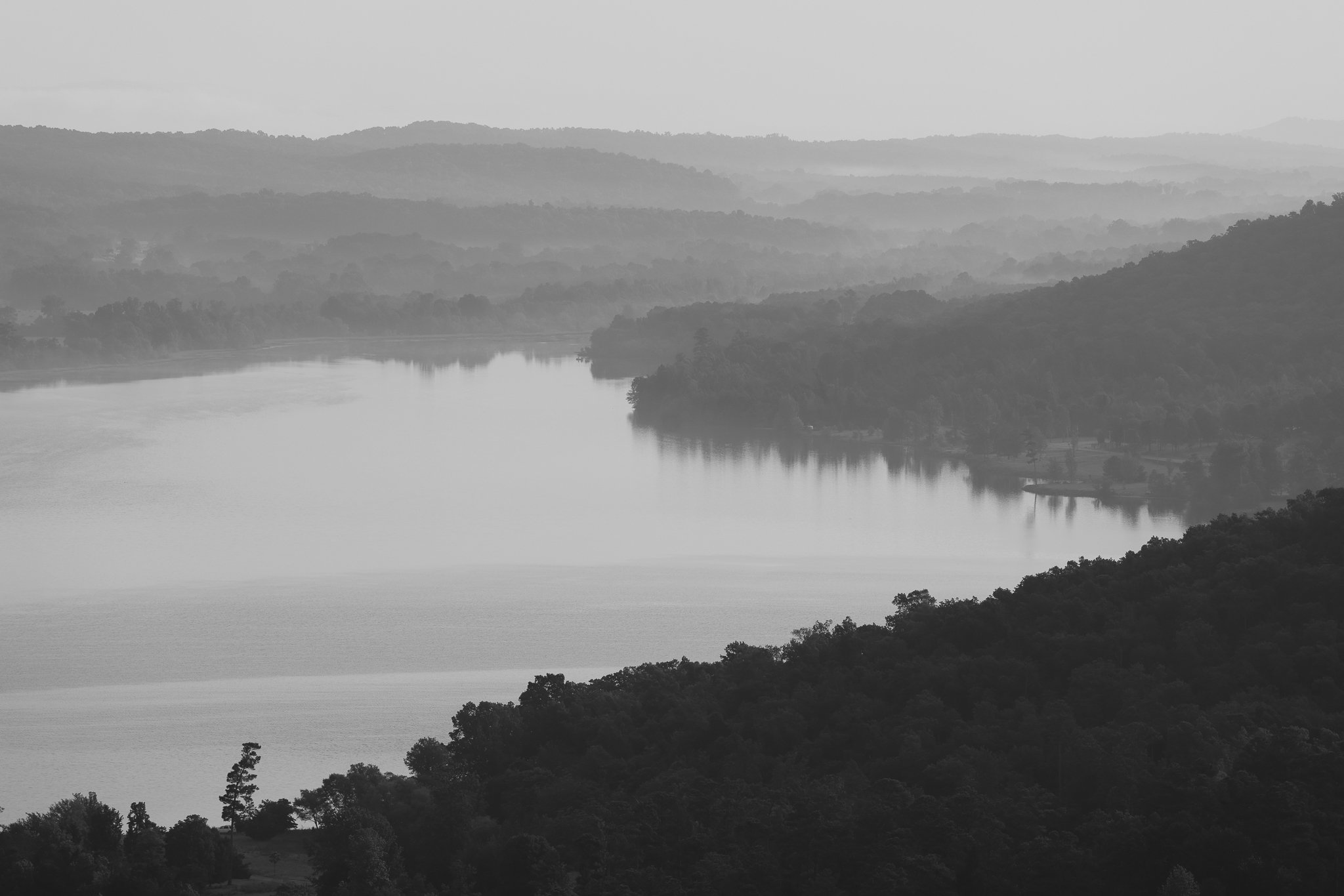
After 200 years of efforts to “tame the Tennessee River,” it’s easy to forget that it was once seen as an immensely difficult body of water to traverse. Rocky shoals, plentiful wildlife, natural obstacles and debris, unpredictable weather, and many other factors limited travel up and down the watershed before Tennessee Valley Authority made the river wider, calmer, and more easily anticipated.
Luckily, this history is not lost. It lives on in rare gems such as Manly DeWitt Barber’s 1906 journal entries, particularly in a section he titled “On The Tennessee River. From Knoxville to Chattanooga in Row Boats.”
In the early twentieth century, outdoor recreation was exploding as a national pastime, with activities like hiking, climbing, and paddling all becoming popular ways for men to test their mettle, express their masculinity, and become a more complete person. Adventures in the wild could even be seen as a cure for ailments, as Manly’s son was prescribed a spot on the trip by his doctor after he’d fallen ill.
Today, of course, outdoor recreation is a popular pastime and has tremendous economic impact, with an estimated $104 million in potential spending each year along the Tennessee RiverLine alone.
Preparing for a Rowboat Journey Down the Tennessee River
Barber’s trip included a party of six people spread across three boats. Each member prepared very differently for the trip. Today’s campers all prioritize different things when it comes to what they need to bring, and this was true of Barber’s expedition as well. Barber was put off by one of his companions who insisted on bringing the latest and greatest gadgets he had assembled himself—including his bed—which led to one of the most amusing passages in the journal:
“Charley also had prepared beforehand a scientific, newfangled monstrosity, [a bed made of canvas, wood, and wires] to attach ingeniously each night to some crocheted sticks driven into the ground, and hang between Heaven and earth, peacefully dreaming of his happy voyage down the long river – but I suspect that all of the pleasant dreams on that new cot were not fully realized. We shall see later.”
Life on the River: Hardship, Humor, and Determination
Barber was a believer in simplicity and preparation. In one such section, as he shared his concerns over blistered hands, sudden drenchings, countless mosquitoes, and other obstacles, his young sons paid him no mind:
“But such argument at this time was like pouring water on a duck’s back. They did not even listen to such talk. What they wanted was to be off, so we lost no available time in appointing our luggage to the boats, and we were soon gliding down the river.”
What follows is a fascinating account of their travels, which is made even more interesting if you have a basic knowledge of current landmarks along the RiverLine. Early on in their quest, for example, they pass the “East Tennessee Institute for the Insane,” which is now the grounds of Lakeshore Park in Knoxville.
Encounters with Rivermen and River Communities
Barber talked about the wild nature of the river, saying that around its many curves there are breathtaking views, and notes that the windy path is part of what makes the Tennessee so special. He is also grateful for many of the people he meets along the way, as he talks to riverboat captains and ferry operators—or sometimes just vague “rivermen”— to get directions and advice. There is also a great section where he is frustrated at the limited supplies available in a ferry general store:
“I could scarcely see the object of the store if they did not keep what men wanted to eat. Possibly they kept what men wanted to drink instead.”
Fossils, Bluffs, and Exploration Along the Tennessee River
The varied landscape lent itself to all kinds of activities for the party to do each night; Manly Barber was always keeping an eye out for fossils, and had a large fossil collection. Three fossils he found were identified as unique specimens by scientists and named after him. Sometimes the group would scale bluffs to get views from the top, and some nights they’d hunt, fish, and cook up their spoils.
Along the way, they put considerable effort into finding springs and optimal places to rest. Sometimes they come across farms with abandoned barns where they can sleep, and sometimes they take a little bit of food to help them regain their strength. Their consideration of the farmers is laudable, as they make a concerted effort to be good Christians and take only a single apple for each party member despite coming across an orchard full of fruit.
The adventure is full of funny scenes, including a part where they chase a wind-blown hat against the current during a storm, which really frustrates the writer. “I’d rather chase a hat flying before the wind down Gay Street any day, than to chase one in a loaded rowboat down on the river with a strong current running one way and a strong wind blowing another way.”
Overall, Barber said “I was somewhat surprised at the magnitude and beauty of the Tennessee River. It was a much larger stream than I thought it was… I am also surprised that so beautiful and navigable a river should have so few towns along the river, and do so small an amount of business.”
Read Manly DeWitt Barber’s Full 1906 Tennessee River Journal
If you enjoy getting historical perspective on familiar places, funny sarcastic comments, and adventurous storytelling, the full journal is available publicly to read both in Barber’s gorgeous handwriting and in a transcribed text-based version from the McClung Historical Collection, housed in Knoxville, TN.
https://cmdc.knoxlib.org/digital/collection/p15136coll4/id/7019/rec/1