
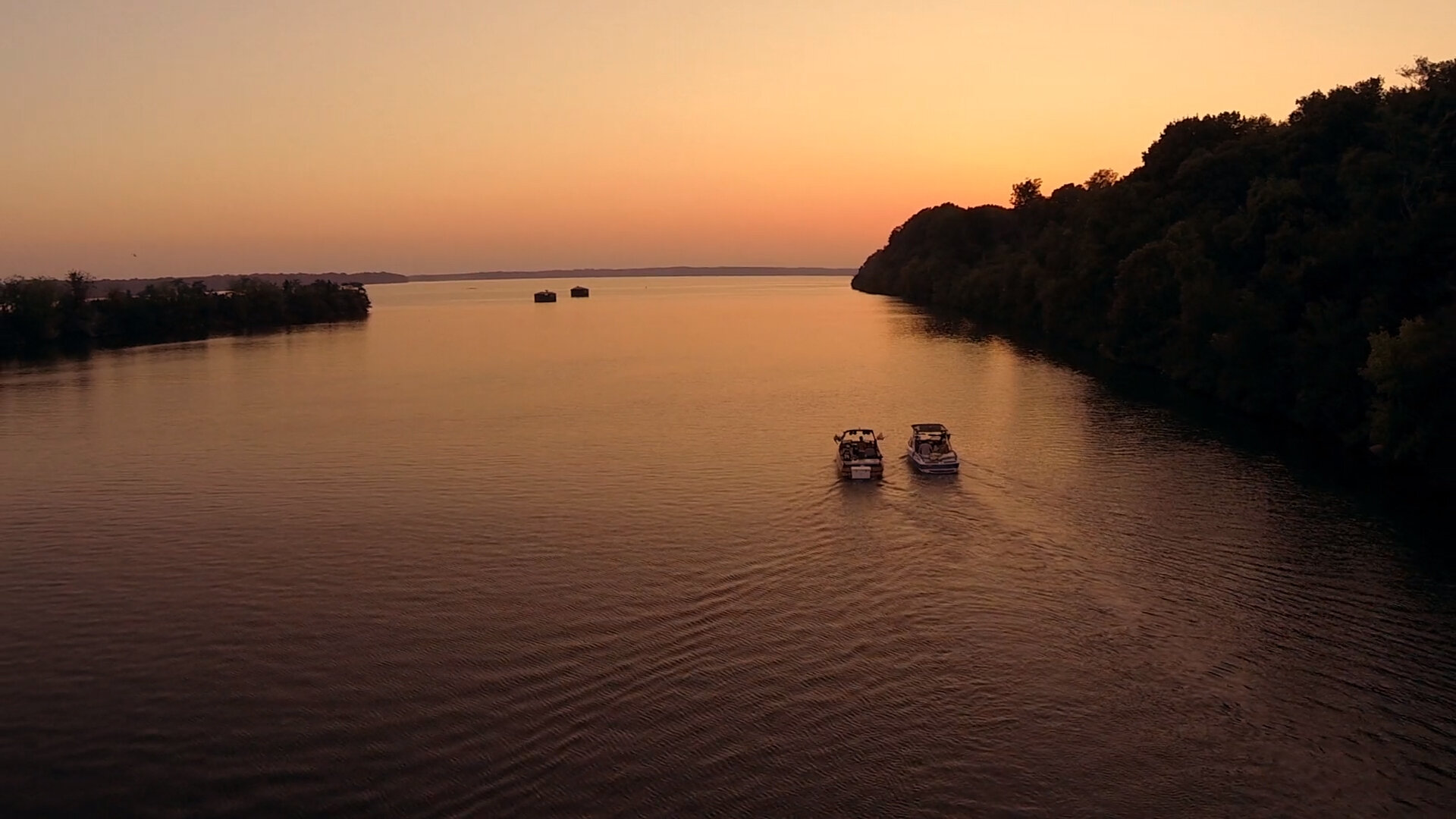
Are Tennessee River Lakes Really Lakes? Understanding TVA Reservoirs
Is Kentucky Lake part of the Tennessee River? And is it really a lake?
The short answer: yes, Kentucky Lake is part of the Tennessee River—and it is a reservoir. The same is true for Guntersville Lake, Pickwick Lake, Wheeler Lake, and other familiar bodies of water along the river.
For people new to the Tennessee RiverLine, the names can be confusing. If you are paddling on Guntersville Lake or Pickwick Lake, are you on a lake or a river?
The most accurate answer is: both. You are on a reservoir created by a dam along the Tennessee River. These reservoirs may look and feel like lakes, but they remain connected parts of the river system.
How TVA Reservoirs Changed the Tennessee River
For generations, the Tennessee River was an important route for travel and trade, but it could also be difficult to navigate. Rocky shoals, changing water levels, strong currents, and flooding created challenges for communities and commercial transportation.
Hales Bar Dam, built by private interests in 1913, was the first dam on the main stem of the Tennessee River. It was later replaced by Nickajack Dam in 1967.
Wilson Dam followed in northwest Alabama. Construction began in 1918, and the dam was completed in 1925. It helps maintain the water levels of historic Muscle Shoals, a stretch of rocky river that once created a major obstacle for navigation.
The Tennessee Valley Authority was formed in 1933 by an act of Congress to provide power to the residents of the Tennessee River Valley, as well as provide navigational infrastructure and manage the water levels and banks of the river, often a source of devastating flooding. Officials at TVA found the best possible solution to all of these problems at once: building dams which would generate hydroelectric power and control water levels.
TVA’s Unified Development of the Tennessee River System, approved in 1936, established a long-term approach to flood control, navigation, electricity generation, recreation, and resource management across the region.
Today, there are nine reservoirs that create a connected, navigable waterway from Knoxville to Paducah.
Tennessee River Lakes vs. Reservoirs: What Is the Difference?
A natural lake forms through geological and environmental processes. A reservoir is a body of water created or managed by a dam.
Along the Tennessee River, the distinction matters because water levels and flows are managed as part of an interconnected system designed to support navigation, flood control, hydropower, water supply, recreation, and other public benefits.
Still, “lake” is a perfectly understandable term to use in everyday conversation. TVA itself uses both “lake” and “reservoir” in public-facing information. The nine mainstem Tennessee River reservoirs, traveling downstream from Knoxville, TN, to Paducah, KY, are: Fort Loudoun Lake, Watts Bar Lake, Chickamauga Lake, Nickajack Lake, Guntersville Lake, Wheeler Lake, Wilson Lake, Pickwick Lake, and Kentucky Lake.
Together, they form a continuous, navigable channel along the Tennessee River’s 652-mile reach.
Why Tennessee River Reservoirs Feel Like Lakes
On many stretches of the Tennessee River, the current can feel gentle—or nearly unnoticeable. Open water, broad shorelines, quiet coves, and scenic backwaters can make these reservoirs feel much more like traditional lakes than a free-flowing river.
That does not mean conditions are always calm. Wind, weather, water levels, dam releases, recreational boat traffic, and commercial navigation can all affect conditions on the water. The Tennessee RiverLine encourages paddlers and boaters to review current river safety guidance, check relevant TVA information, and choose an experience appropriate for their skills and conditions.
For experienced river and creek paddlers, Tennessee River reservoirs can offer a different kind of outing. On slower-moving stretches, paddlers may need to rely more on their own effort while accounting for wind, waves, wakes, and other watercraft.
Recreation, Navigation, and Shared Use
The Tennessee River is both a recreation destination and a working waterway. TVA’s reservoirs support boating, paddling, fishing, camping, hiking, wildlife viewing, and other outdoor experiences throughout the Tennessee Valley.
The river’s navigation system is also central to its identity. Nine main locks and four auxiliary locks allow commercial and recreational vessels to travel between reservoirs. TVA operates the dams and manages the larger river system, while the U.S. Army Corps of Engineers operates the navigation locks.
Recreational vessels can use Tennessee River locks without charge. However, boaters should contact the appropriate lock operator, follow all instructions and signals, and plan for possible delays related to commercial traffic, which gets priority, or operating conditions.
For paddlers, locking through requires advance planning, appropriate equipment, and careful attention to directions from lock personnel. Before planning a route that includes a lock, review the Tennessee RiverLine’s trip-planning resources, current river safety guidance, and TVA navigation information.
Lakes in Name, River at Heart
The “lakes” along the Tennessee River are managed reservoirs created by dams and connected by a significant inland navigation systems.
They may look like lakes, feel like lakes, and serve as beloved places for paddling, boating, fishing, and time outdoors. But they are also part of a living, working river system that connects communities, supports recreation and commerce, and shapes life across the Tennessee River Valley.
So, go ahead and call them lakes. No one will give a dam! Just remember: there is always a river flowing through them.
Ready to explore? Use the Tennessee RiverLine’s Plan Your Journey resources to find river access points, outfitters, suggested itineraries, safety guidance, and experiences in RiverTowns along all 652 miles of the Tennessee River.