
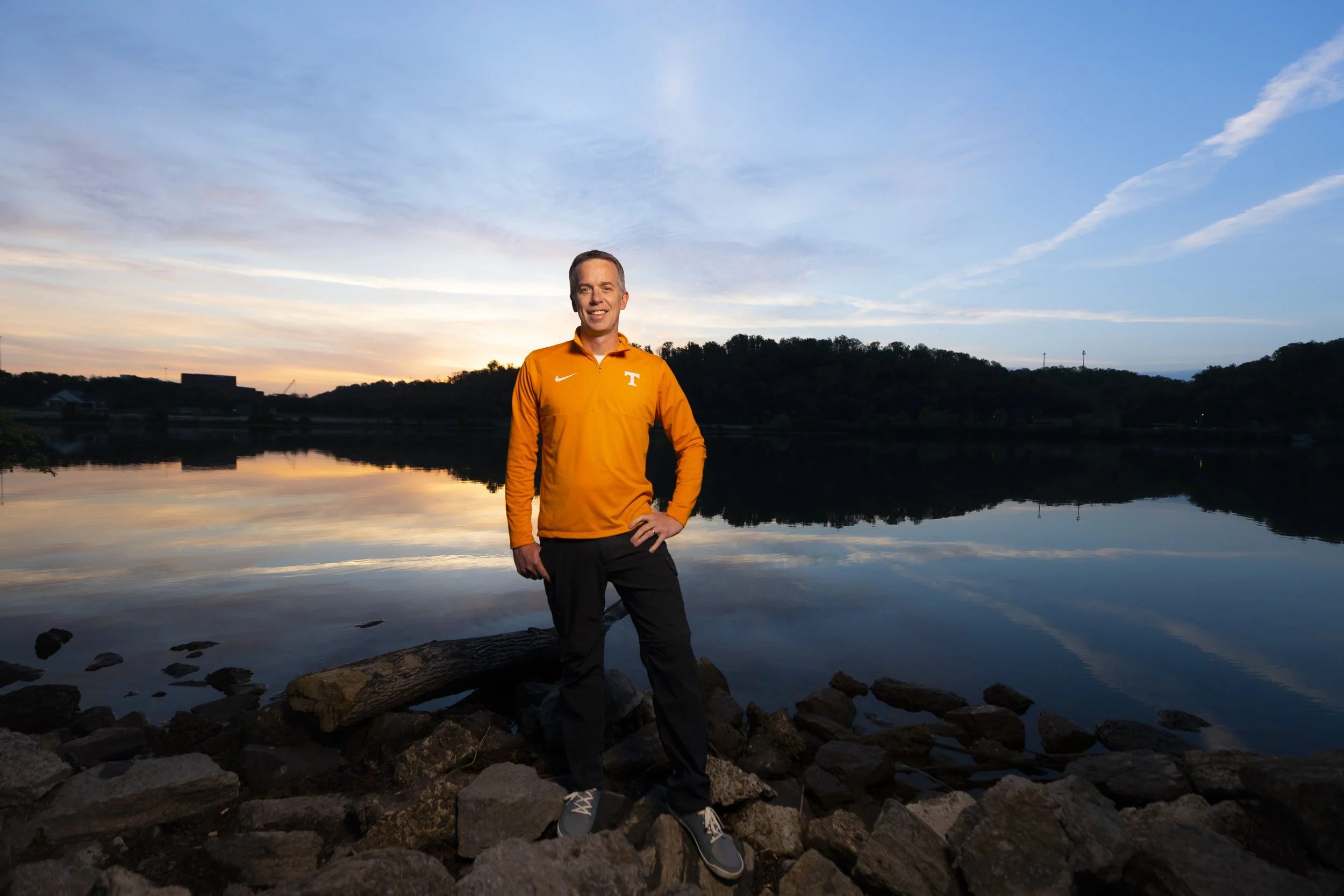
By: Brad Collett, Executive Director
I can still smell the sunscreen, hear the cheers, and feel confetti cannons pop like it was just yesterday.
Five years ago, a group of people gathered on warm spring day beside the Tennessee River in Knoxville to celebrate the official launch of the Tennessee RiverLine initiative. They were partners, community and government officials, university leaders, students, invested citizens, and recreation enthusiasts from multiple states with backgrounds and interests as diverse as the communities from which they came.
We gathered in solidarity not knowing where the journey that lay ahead would take us. We were convicted nonetheless by the worthiness of our endeavor and our trust that it would benefit our families, friends, and neighbors for generations to come.
Remarks that day from TVA Vice President David Bowling and UT Knoxville Chancellor Donde Plowman echoed optimism for what the future would hold if we remained committed to a profound sense of common purpose that had brought us together that day. They used words like opportunity, transformation, and vision. We spoke of infrastructure, investment in access for all, and the power of partnerships. We posed in front of newly christened fleets and life-sized maps of the 652-mile river that connects 1.2 million acres of public lands and waters.
These are the tools and values that have guided our journey since, making possible the many ways Tennessee RiverLine is fundamentally changing how we experience, connect with, and care for our storied river. I have to admit that while I always knew that we were doing something special, that it would build such momentum and near unanimous support so quickly across the river’s reach was not on my bingo card.
It’s overwhelming to know that more than 500 recreation and stewardship events have been held on and along the river by 23 RiverTowns communities, each expressive of the community and landscape in with they were held, and meaningful locally and regionally regardless of size. Cleanups that honor migrating birds, races that celebrate endemic freshwater fish, hikes that interpret New Deal history, and twilight paddles to witness a rising full moon or a colony of endangered bats. More than 30,000 [LH1] area residents and visitors have a connection to the river thanks to these experiences, their lives touched in so many unexpected and profound ways.
I think back to stories like the city director who discovered a new passion for outdoor recreation during a RiverLine paddle, or the woman who sought restoration from cancer treatment while birding on Tennessee. It’s the family of four who had their first paddle experience in fleet kayaks and were spied in the parking lot shopping online for boats and browsing the RiverLine event calendar for upcoming events. It’s the look of astonishment on a child’s face as they witness a bald eagle catch its breakfast, or that look of achievement when they learn to wet a line and catch their own. It’s seeing Paddlesports Leadership Academy graduates start and grow their businesses and make river spaces and experiences accessible in their communities.
It’s moments like these when I grin and whisper to myself, “It’s really happening.”
Having bruised my bottom on a boat ramp more than once while launching at an event, I can personally attest to how these activations and experiences are inspiring new ideas and support for investments in river access infrastructure. Through the RiverTowns Program, the voices of 4,500 residents and leaders have brought their ideas to the table for how their communities can improve quality of life and build a stronger outdoor economy by investing in new riverfront parks, campgrounds, trails, launches, and more. As a landscape architect, seeing eyes lit up by design plans that render the future in a way previously unimaginable will never get old. “Can that really happen here?” I’ve heard excitedly asked while the city manager is already having a sidebar with a federal funder about grant eligibility. Already. $11.5 million is committed to infrastructure projects, and additional funders are coming to the table to invest in the initiative.
It’s moments like this when I grin and whisper quietly to myself, “It’s really happening.”
The eyes of the nation and the world [LH2] are again looking to the Tennessee River Valley as a model for regional collaboration, resource-based economic and community development, and innovation. Only this time they’re not studying hydropower. The river’s story, reframed through the RiverLine, is being told in local papers, the evening news, and national magazines. It’s the subject of international television shows and local podcasts, panel discussions, keynotes, and the occasional PechaKucha presentation. RiverLine stickers are showing up in parking lots on cars that aren’t my own, and water trail signage is dotting the water’s edge. Strangers see my RiverLine shirt and come up to say “Hey, I’ve heard about the RiverLine, such a cool project! We were just talking about planning a trip the other day!”
It’s moments like these when I grin and whisper quietly to myself, “It’s really happening.”
To have played a part in inspiring these achievements and stories and to have built a team of talented, impassioned professionals who support them are a source of great personal pride and the honor of my career. They pale in comparison, however, to something I, and all, have gained through RiverLine that is perhaps of greatest importance: a connection to each other.
Over the past five years, I’ve traveled to every mile of the river, eaten my fair share of fried catfish and barbeque, wet more than a few paddles, and taken a selfie or two (thousand) while meeting and working alongside some of the Valley’s most dedicated, inspired, and generous people. It’s the personal moments with you [LH3] – the creative conversations, the laughs and smiles, the welcoming embraces and congratulatory high fives, and even the occasional tears–that stick out the most as I reflect on the past five years, as well as the years of ideation, iteration, and experimentation leading up to them.
The RiverLine’s progress–past, present, and future–moves at the speed of trust and is built on a foundation of relationships that only time, authentic engagement, aligned aspirations, and intentional cultivation will permit. The connections between communities and between people of all walks of life forged through the RiverLine are a testament to the unifying power of an audacious idea, a common heritage, and a shared opportunity.