
12 Things I Wish I Knew Before Paddling 80 Miles on the Tennessee River
(Tyler Kirkendall was part of the RiverLine team for just over a year during his service as an AmeriCorp service member . He joined the Paddle Georgia trip to capture the experience, vlogging each day about the experience, capturing content to document it, and writing about his experience.)
Planning a multi-day kayaking trip on the Tennessee River? From unexpected gear essentials to the simple value of conversation during long miles on the river, these are 12 lessons learned from a week spent paddling day after day under the summer sun.
There’s no better way to understand the Tennessee River than from the seat of a kayak.
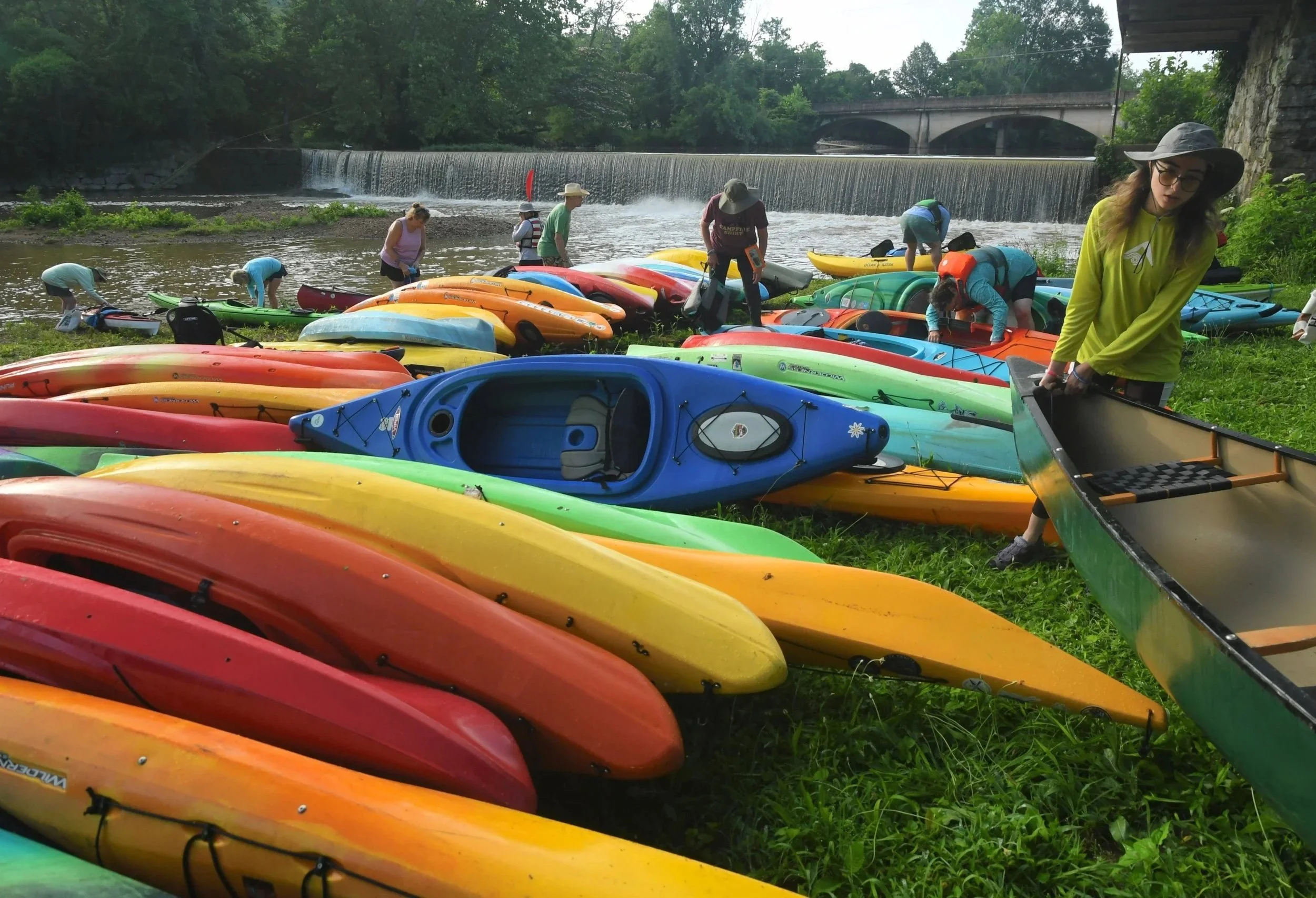
Last summer, I joined paddlers from across the Southeast for Paddle Georgia, spending a week navigating more than 80 miles across Chickamauga Creek and the Tennessee River. What began as a physical challenge quickly became a deeper lesson in endurance, preparation, community, and connection to the water.
Paddling for consecutive days is no small task, and after spending a full week at Paddle Georgia navigating Chickamauga Creek and the Tennessee River in my kayak, I wanted to report back with 12 tips I wish I had been given before I set out on the 80+ mile journey that was as satisfying as it was strenuous.
Gloves Are Essential
No amount of sunscreen could have been enough to combat the amount of sun that the back of my hands would soak up, and I will forever be thankful that a friend I made on the trip loaned me some gloves for the final 16-mile paddle. Gloves will protect you from the sun no matter how much you sweat or how much water runs down your arm, along with the added benefit of extra grip easing the load on your fingers.
Don’t Be Afraid to Get in the Water
If you feel yourself getting too warm for comfort, don’t overthink it and just pull over to go for a swim like you would on any other hot day. Throughout the trip, I couldn’t tell you how many people jumped in the water and said it gave them a massive energy boost by cooling them off. Of course, be aware of the water conditions and swim somewhere you know it’s safe. The sun is sure to dry you out quicker than you think on a hot day.
Make Sure Your Paddle Has a Comfortable Grip
On a shorter trip, a straight-shafted paddle with a metal, wood, or plastic handle isn’t a big deal, but on a longer trip you will want a little boost so you don’t waste your strength just keeping the paddle in your hands. Some grip tape, a bend to hold onto, or some other kind of external grip will help keep the paddle in your grasp when your hands are wet and tired.
A Hydration Pack Is a Game Changer
Having a straw that reached into a pouch of fresh water was an absolute game-changer since I didn’t have to turn around or stop paddling to hydrate. The extra storage space for sports drinks, sunscreen, bug spray, and a backup water bottle was a huge help too so they weren’t crushing the food in my dry bag. Keeping the hydration pack strapped to my back also forced me into proper posture and acted as a cushion against the seatback in my ‘yak.
You Probably Need More Breaks Than You Think
I am used to double-digit-mileage on hikes, where I feel like slowing down is going to make it more difficult to start back up and get in flow. While paddling, however, every time I would pull over to a sandy cove or lay under a tree in the grass and close my eyes for a few minutes, I would come back with unprecedented vigor. Stretching the soreness out of your legs and getting off the water is essential, and the river isn’t going to dry up if you take a few minutes to chill on a long journey with more days paddling ahead.
No Breakfast Is Too Big Before a Long Paddle
Paddling is not like certain high-impact exercises such as running where a full belly will slow you down. I have a pretty big appetite and no matter how much I could get down before hitting the water, I’d still end up hungry a few hours into a paddle on a hot day. Days where I’d eat something hearty like eggs, chicken, and cheese alongside a biscuit were much easier than days where I’d only have some instant oats and a few strips of bacon.
Lightweight Sun Protection Matters
Long sleeves are a must if you are already sun-damaged, and a hood can protect your face and ears when it’s up, or your neck if it’s down. When your sleeves or hood start to feel hot, dip them in the water for an instant cooling sensation!
Compression Pants Are Underrated
I ended up wearing heavy cotton sweatpants the last day to protect my knees from the sun, and just keeping some compression pants under my shorts would have been a whole lot easier to work with. Many brands share the SPF of their pants right on the tag.
A Little Music Can Help
Many people enjoy paddling as a mindfulness practice, saying it helps them engage with the moment. When you are living in the moment full-time for a week or longer, if you’re like me, you may start to get some intrusive thoughts about backing out of the commitment. By day five or six, looking at the next day’s schedule and seeing another 15 miles may be discouraging. A little music or a podcast with just one (water-resistant!) earbud in can keep your mind off the daunting task ahead and make the time go by faster without disrupting the peace of paddlers around you.
Conversations Can Help the Miles Go Faster
With 10 miles under my belt and five to go, I’d often start a conversation with another paddler to make the time fly by. The task is much more enjoyable when it’s a shared experience, and keeping your mind on the person next to you rather than on your weary back can feel like a load off your shoulders. I was always surprised with how much progress we’d made after an hour or more chatting with a buddy boat.
You Might Just Sleep Better Than Ever
I am a very light sleeper. A door shutting down the hall is enough to wake me up and keep me awake for hours most nights. This was not the case on the paddling trip. Paddling each day for long distances under the sun was enough to give me the best week of sleep of my life, including a morning where I slept through two alarms and hundreds of campers getting ready for the day around me. I only woke up once I felt the heat of the morning sun pressing the back of my neck through the tent.
Be Careful What You Put in Your Dry Bag - Especially Bananas
Early in the week, I put a banana in my dry bag. I ate it that afternoon, but the smell of the banana lingered for the whole week until I twisted the bag inside-out, unfurling all the nooks and crannies, and found a rotting banana tip that I had no idea had squeezed itself out. The banana had been good fuel for that earlier afternoon, but it later served as a reminder that the dry bag is a very dark, unforgiving place if you forget exactly what you keep within.
While every multi-day paddle experience is different, one thing became clear over the course of the journey: long days on the river have a way of simplifying things. The miles may challenge your body, but the rhythm of paddling, the conversations along the way, and the connection to the landscape create something deeply rewarding in return.
Ready To Plan Your Journey?
Whether you’re preparing for your first overnight paddle trip or simply looking for a new way to experience the Tennessee River, sometimes the best lessons come one mile at a time. Ready to experience the Tennessee River for yourself? Explore paddling routes, recreation experiences, and trip-planning resources through our Plan Your Journey toolkit.